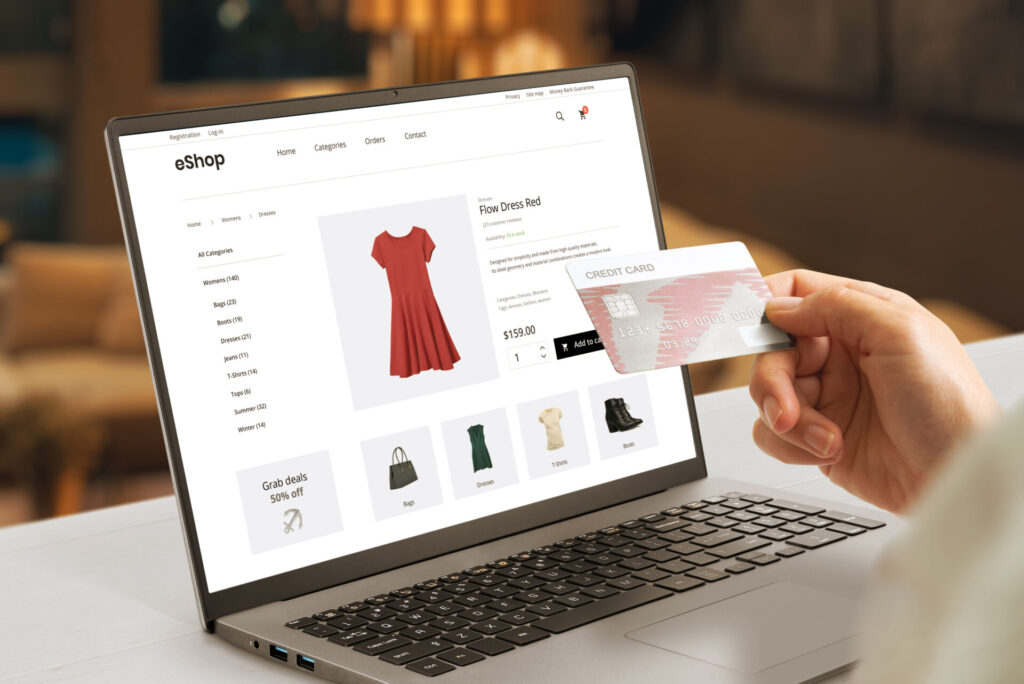
During sales, massive promotions, or seasonal peaks, online stores often face a sudden and intense increase in customer demand. How can you respond effectively to these requests while maintaining a smooth and personalized experience? The answer lies in one word: chatbot—or rather, an intelligent shopping assistant capable of acting as a real conversion lever.
E-commerce companies know this: more than 75% of them will adopt AI solutions to improve their customer experience by 2026.
Chatbots boosted by generative AI: a fully-fledged sales advisor
Long confined to the role of automatic response, chatbots are evolving. The rise of generative artificial intelligence now allows bots to interpret complex queries, contextualize exchanges, and engage in conversations with a level of fluidity and relevance never before achieved.
Gone are the days of rigid scripts: now it’s all about personalized conversations, where the chatbot understands the user’s intent, asks questions, recommends products, and even knows how to handle objections like a store advisor.
The result? A more intuitive, engaging, and above all, more efficient customer experience.
Absorb traffic without compromising quality
Automate product responses
A significant portion of customer inquiries are simple questions, but they are crucial to the purchase.
For example, on a cosmetics website, you might see frequently asked questions such as: “Is this product suitable for my skin?”, “Can I use it if I’m pregnant?” etc. Even if these answers are often found on the product pages, customers prefer to get a direct answer rather than searching for it themselves.
The e-commerce chatbot then becomes a facilitator, able to synthesize relevant information, reassure the buyer, and unlock a purchasing decision in a matter of seconds.
Manage massive traffic during peak sales periods
Sales, Black Friday, the holiday season… These periods lead to an explosion in traffic and requests. Automation via a bot allows you to maintain a high level of service, even with thousands of simultaneous conversations, 24 hours a day, 7 days a week.
This means that the bot can handle incoming requests simultaneously and throughout the entire purchasing journey:
- Pre-sales: the chatbot reassures your visitors from the very first interactions by answering questions about products, terms and conditions of sale, or the brand itself.
- Purchase:
- It removes friction points (delivery, payment, technical errors) to reduce cart abandonment.
- It can also make product recommendations based on the user’s questions and profile.
- It can push promo codes to encourage purchases.
- After-sales: it provides effective follow-up (packages, returns, refunds) to streamline customer relations and strengthen loyalty.
Create more engaging conversation entry points
In current usage, many interactions with bots begin by clicking on the chat icon at the bottom right of the screen. This is where we are used to starting a conversation with a chatbot.
But if you want to trigger more focused and engaging conversations, a new approach is to integrate the most frequently asked questions directly into the product page — for example: “Is this product suitable for sensitive skin?” or “Is it available in other colors?” These clickable elements open a conversation with the bot.
This mechanism triggers proactive interaction at a strategic point in the purchasing journey. As a result, users feel supported and engagement increases.
Measurable results in engagement and conversion
Some brands that have implemented a generative AI-based chatbot have found that:
- Conversion rates are 10 times higher when users interact with an intelligent virtual assistant.
- The average basket size increases thanks to more personalized support.
- The return rate decreases because customers receive better advice upfront.
Every conversation between a customer and your chatbot contains valuable information: What are the most frequently asked questions? Where do customers encounter friction? Which products generate the most doubts or returns? Ignoring this data means missing out on opportunities for continuous improvement, whether in your content, your offers, or your user experience. A detailed analysis of these post-sale exchanges allows you to adjust your customer journey, anticipate future sticking points, and refine your next marketing campaigns.
And tomorrow: towards a new norm in e-commerce?
With the emergence of multimodal systems (chat, voice, image), brands are entering a new era of conversational commerce. The goal is no longer to guide users through a fixed purchasing funnel, but to adapt to their needs at the right time through conversation.
This is a paradigm shift. Brands that can offer this fluidity and personalization will have a head start.
Dydu, your partner for an AI-enhanced e-commerce experience
At Dydu, we support e-commerce brands in implementing intelligent conversational solutions that can address the following challenges:
- Boost conversion rates with bots that recommend, advise, reassure, and guide.
- Manage traffic spikes without overloading support teams.
- Increase engagement by creating strategic touchpoints throughout the customer journey.
- Control costs while improving customer satisfaction.
Our technology integrates easily into your digital ecosystem (website, CRM, PIM, analytics solutions, etc.) and complies with GDPR requirements from the design stage.
👉 Why not make conversational AI your next growth driver? Let’s talk!
Share this article!